
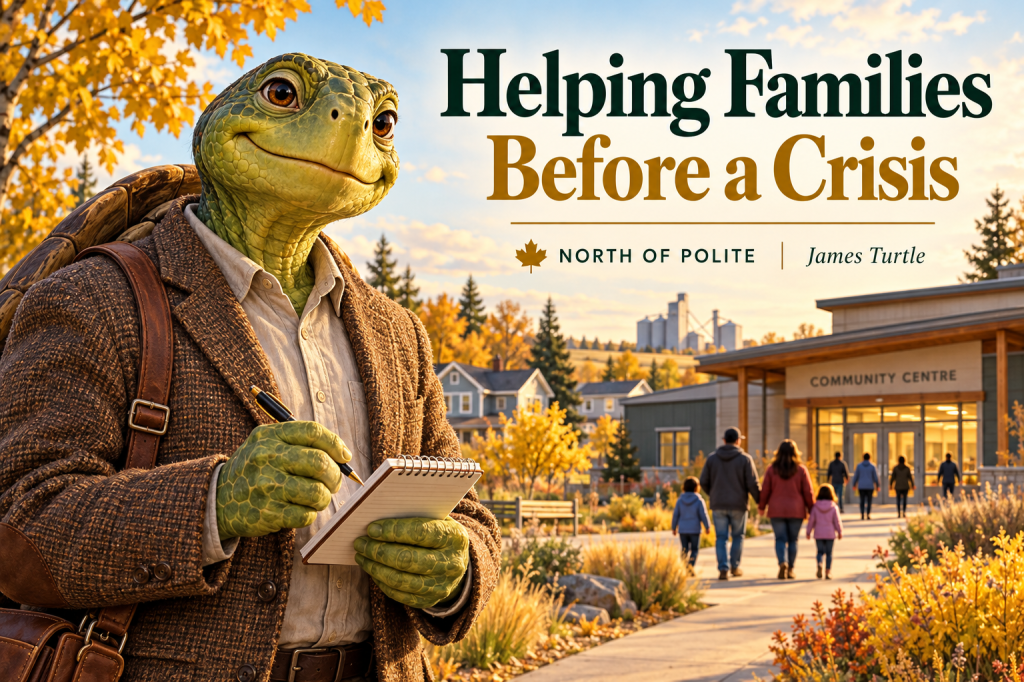
By James Turtle | North of Polite
October 8, 2026 · Approximately 2 minutes
A child’s safety begins long before anyone opens a case file. It begins with the people, homes and support around them—and whether help arrives while a family still has room to catch its breath.
A new agreement between the Saskatoon Tribal Council and Canada aims to make that earlier help possible.
Signed on October 7, Māmowōhkamātowin—“working together” in Cree—provides $269 million over seven years for child and family services serving the council’s seven member First Nations.
They are Kinistin Saulteaux Nation, Muskeg Lake Cree Nation, One Arrow First Nation, Yellow Quill First Nation, Mistawasis Nehiyawak First Nation, Muskoday First Nation and Whitecap Dakota Nation.
According to Indigenous Services Canada, the agreement supports prevention, housing assistance, facilities, services representing First Nations children and families within the care system, and help for young adults transitioning out of care. It also gives participating Nations greater flexibility to direct resources according to their priorities.
Tribal Chief Mark Arcand emphasized supporting families and keeping children connected to their First Nations cultures.
That is the part of this announcement worth following beyond the ceremony.
For a family under pressure, the useful question is simple: what help can we actually get? A funding agreement becomes meaningful when people know where to turn, can reach someone, and receive support that fits their circumstances.
Seven years of funding offers a chance to plan beyond the next budget cycle. The opportunity is to build dependable services, with communities helping determine what those services should look like.
The participating Nations are distinct communities. Their experiences should guide the reporting that follows, rather than being folded into one general story about Indigenous families.
There are practical questions ahead: When will supports become available? How will families access them? How will each Nation’s priorities shape spending? And how will communities assess whether the changes are working?
Those questions belong alongside the good news. Following the results is how we give an important commitment the attention it deserves.
For now, this is a hopeful step: resources and flexibility intended to help families earlier, support young people into adulthood, and keep children connected to their communities.
The signing marks a beginning. The strongest story will be what families experience next.
Source: Indigenous Services Canada’s October 7 announcement.
© 2026 North of Polite. Original reporting, analysis and commentary. All rights reserved. 🍁




What do you think? Have something to add, a question to ask, or a different perspective? We want to hear it. Leave a comment and join the conversation. You don’t have to agree with us—just bring your point of view.