By Nora Tiriganiaq | North of Polite — Nunavut and the North
Ottawa has pointed again to its investment in Iqaluit’s water and wastewater infrastructure as an example of how municipal services can help address housing pressure. The project’s stated aim is to enable development of approximately 2,000 to 2,500 housing units by 2031. For people waiting for a suitable home, however, one distinction is essential: the capacity to serve homes is not the same as homes being built, funded or occupied.
The federal commitment of $108,721,940 was announced in April 2026, not this weekend. It is being highlighted again in broader discussion of housing and homelessness. This is a follow-up on an existing commitment, not a report of newly completed housing.
Why water infrastructure comes first
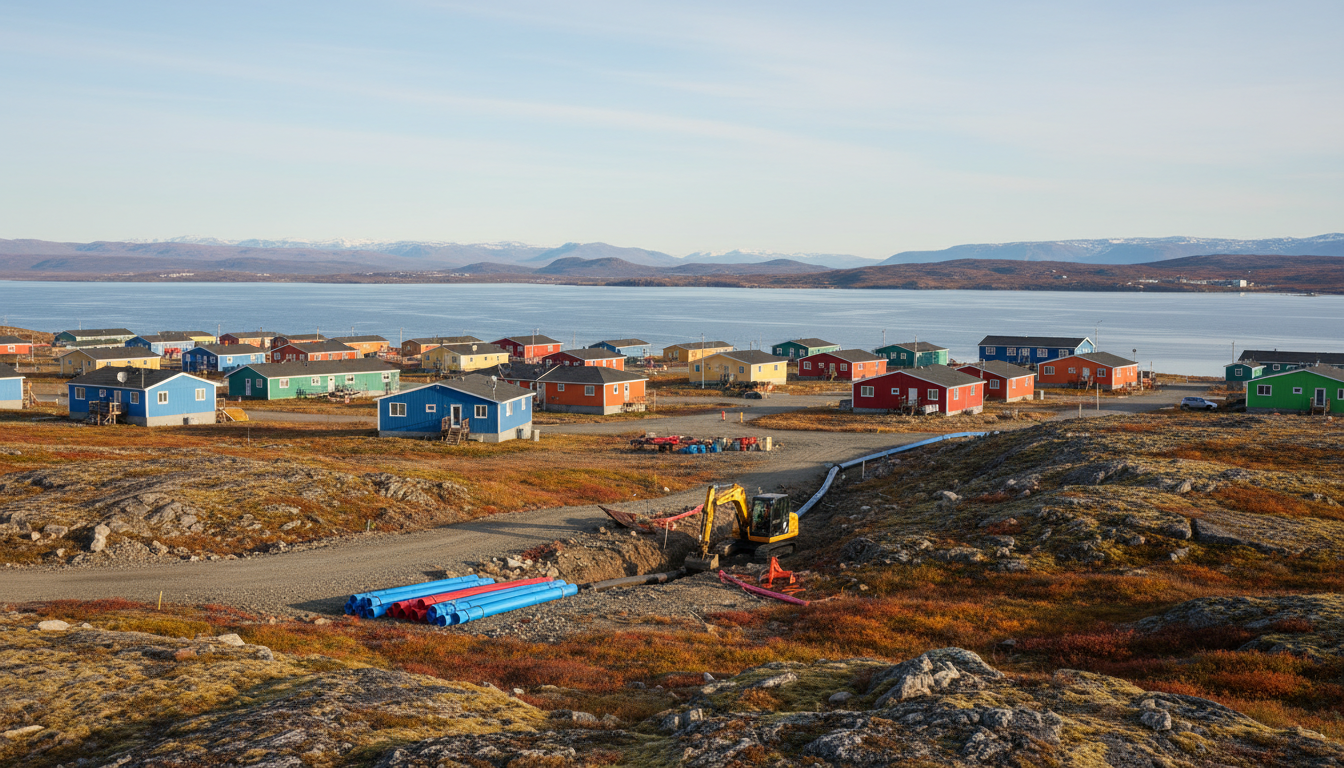
Before new apartments or houses can open, the city needs reliable water delivery and wastewater management. Iqaluit depends on a combination of piped municipal infrastructure known as utilidors and trucked water and sewer services. The announced work covers improvements and expansion of utilidors, alongside upgrades to trucked-service vehicles and facilities.
Without the necessary services, a promising housing plan can remain on paper. Improving water and sewer systems can make development possible and help existing residents at the same time. In Arctic conditions, construction and long-term maintenance also demand planning that accounts for climate, distance and cost.
What the numbers do—and don’t—tell us
The official estimate says the enhanced infrastructure would facilitate construction of 2,000–2,500 units by 2031. It does not establish that those units have all secured building financing, that construction has begun on them, or that all would be affordable to low-income families.
The City of Iqaluit has welcomed the funding as a way to support homes and homeownership. The next public questions should concern engineering milestones, project cost-sharing, actual service capacity and the separate financing needed for housing construction.
Residents deserve to know how many additional serviced lots or units are possible at each stage, when work will be completed and whether investments translate into completed housing. The City and federal government should also distinguish this program from other water-supply investments so that announcements are not counted twice.
Progress should be measurable
The project’s success will depend on whether essential infrastructure is built and maintained, and whether it removes real barriers to more housing. Reporting should track both outcomes instead of treating the final estimate as an achieved result.
For a family living in overcrowded or insecure conditions, an infrastructure promise is not a home. But correctly executed water and sewer upgrades can be the foundation on which actual homes are eventually built. That is a valuable story to follow—and one that requires numbers showing what has been accomplished, not simply what has been announced.
Follow North of Polite: Subscribe for verified Canadian reporting, public-service alerts and useful follow-ups.
© 2026 North of Polite. Original reporting, analysis and commentary. All rights reserved. 🍁
Leave a Reply