

October 5, 2026
Five Canadian stories worth knowing today — with enough context to understand why they matter.
1. QUÉBEC VOTES — AND THE QUESTION IS BIGGER THAN SOVEREIGNTY
Québec voters go to the polls today to choose their next provincial government, with voting running from 9:30 a.m. until 8 p.m. ET.
The Parti Québécois enters election day leading at roughly 29 per cent in the latest polling cited by Reuters. But perhaps the more interesting part of this election is what has not dominated the campaign.
Despite the PQ’s sovereigntist identity, the campaign has been heavily shaped by affordability, strained public services and the economic uncertainty created by U.S. President Donald Trump’s tariffs—particularly in sectors important to Québec, including aluminum and steel. Reuters reports support for Québec independence at about 30 per cent. Reuters
Why it matters: A PQ victory would inevitably revive questions about Québec’s place in Canada, but today’s vote should not automatically be interpreted as a referendum on independence. Voters can support a provincial party for many reasons.
North of Polite will have a separate election-day report from Lucien Lièvre, followed by the actual results tonight. We aren’t calling the election before Québec does.
2. PARLIAMENT RETURNS — AND BILL C-39 DESERVES A CLOSER LOOK
MPs are back in Ottawa, and one of the biggest items before Parliament is the government’s Building Canada Strong Act, Bill C-39.
The legislation attempts to accelerate federal decision-making on major projects, including a one-year timeline for certain decisions and provisions concerning regions deemed to be in the national interest. It also proposes substantial changes to federal labour relations and the circumstances surrounding government intervention in serious labour disputes. Canada
That’s where the political fight begins.
The Assembly of First Nations has raised concerns about the potential implications for consultation and First Nations rights. Labour organizations have objected to provisions affecting strikes and government intervention. The government argues that the legislation establishes clearer rules while helping Canada build major projects faster. CityNews Vancouver
Why it matters: Canadians don’t have to choose between the slogans “build faster” and “protect rights.” The real question is whether Ottawa can accomplish both.
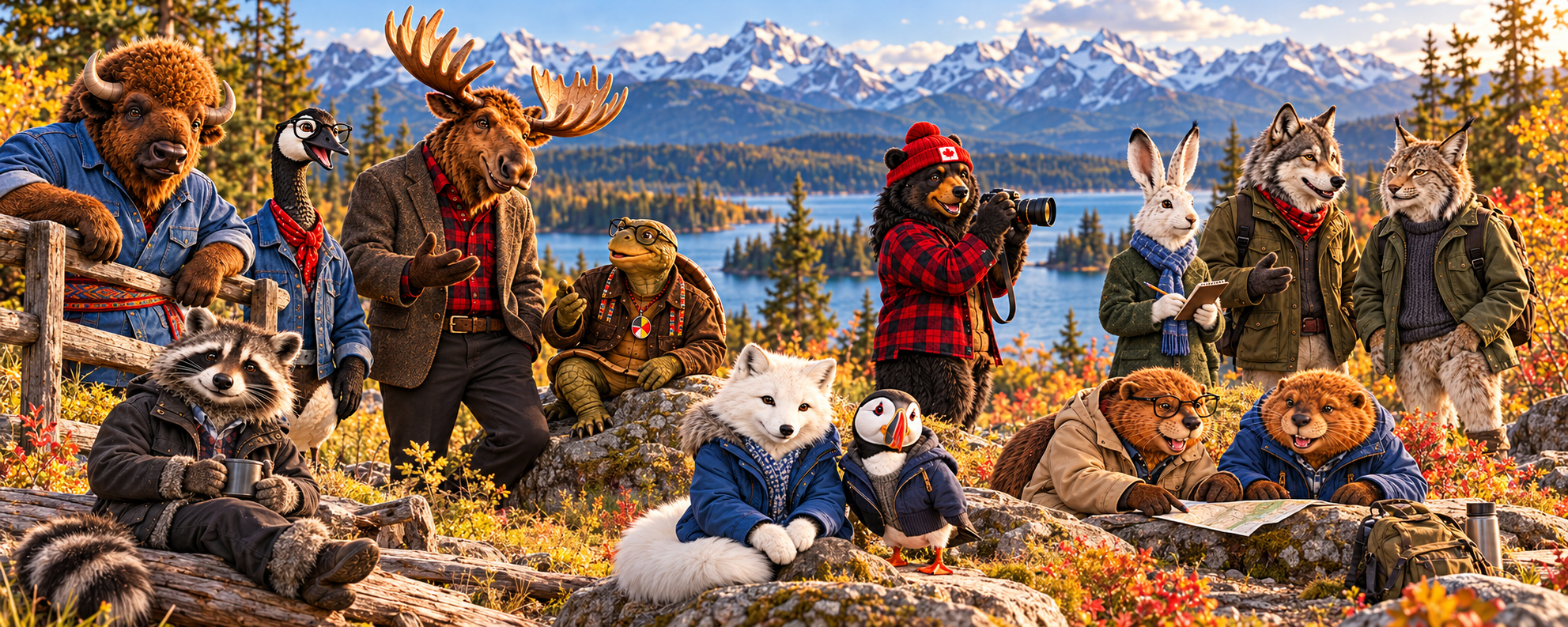
This may deserve a proper Walter Beaver and Frank Facts examination: take the actual legislation apart and tell readers what it does rather than what politicians say it does.
3. CANADA AND INDIA ARE BACK AT THE TRADE TABLE
Canada and India begin the fifth round of negotiations toward a Comprehensive Economic Partnership Agreement in Ottawa today. Talks are scheduled to continue through October 9. Global Affairs Canada says both governments are working toward concluding negotiations before the end of 2026. Canada
There is real money behind the diplomatic language.
Canada says two-way goods and services trade with India reached $30.4 billion in 2025. The two countries have set an objective of reaching $70 billion annually by 2030. Canada is also trying to double exports to markets outside the United States over the next decade. Canada
Energy, critical minerals, agriculture, aerospace and other sectors are part of the broader economic relationship.
Why it matters: Canada has spent years talking about diversifying its trade. The current confrontation with Washington has made that less of an aspiration and more of an economic necessity.
But signing trade agreements and actually increasing Canadian exports are two different things.
That’s what North of Polite should watch: Does diversification show up in the numbers?
4. FIRST NATIONS CLIMATE LEADERSHIP MEETS IN HAMILTON
The Assembly of First Nations’ 4th National Climate Gathering begins today at the Hamilton Convention Centre and runs through October 8.
Today’s program includes a youth gathering, with the larger conference bringing together First Nations leaders and citizens, Elders, youth, environmental specialists, academics and others.
The gathering is focused on implementing the AFN’s National Climate Strategy and highlighting First Nations-led approaches to stewardship, conservation, water, food security, housing and other interconnected issues. The AFN says its strategy contains seven priority areas and 108 strategies and actions. Assembly of First Nations
Why it matters: Canada’s climate discussion is usually presented as an argument between Ottawa, provincial governments, environmental organizations and industry.
That can leave another perspective badly underrepresented: First Nations proposing and implementing their own solutions.
For North of Polite, James Turtle should follow this one. Not to endorse the proposals automatically, and not to dismiss them automatically. We should find out what’s being proposed, what works, what it costs and what communities themselves are saying.
5. SEARCH ENDS AFTER CANADIAN AIR-AMBULANCE TRAGEDY
A much sadder story closes today’s Five.
A Gulfstream G100 medical transport aircraft travelling from Bermuda to Boston disappeared over the Atlantic near Nantucket early Saturday.
Six people were aboard. Four were Canadians and two were Bermudian nationals. Search crews subsequently located debris associated with the aircraft. The U.S. Coast Guard suspended its search Sunday after an extensive operation, and the aircraft’s operator has said those aboard are presumed dead. NBC Boston
The aircraft was operated by Hamilton-based Latitude Air Ambulance.
Why it matters: There isn’t an analysis or political argument that needs to be attached to every tragedy.
Six people left Bermuda expecting to arrive in Boston.
They didn’t.
Today, families in Canada and Bermuda are dealing with that reality.
North of Polite extends its condolences to everyone affected.
THE BOTTOM LINE
Today’s five stories tell very different pieces of the Canadian story.
Québec is choosing a government. Ottawa is debating how quickly Canada should build and under what rules. Canada is trying to expand one of its most important potential overseas trading relationships. First Nations are gathering to discuss their own approaches to climate and stewardship. And Canadian families are mourning after a terrible aviation tragedy.
Different stories. Different parts of the country.
Five things worth knowing.
Facts first. No noise. 🍁
© 2026 North of Polite. Original reporting, analysis and commentary. All rights reserved. 🍁




Leave a comment