Part One — How Did We Get Here?
North of Polite
There’s a question echoing across Canada today. It’s heard perhaps most often in Alberta, but it belongs to every Canadian:
How did we get here?
Before talking about the future, perhaps we should look at the past—not through nostalgia or political talking points, but through documented history.
Canada has faced difficult moments before.
In 1939, when war came, young men from Alberta stood alongside Canadians from across the country. More than one million Canadians and Newfoundlanders would eventually serve during the Second World War.
At home, Canadians produced food and war materials, worked in industry and made sacrifices of their own.
It was not a country without disagreements or injustice. But when an enormous challenge arrived, people from very different places found a common purpose.
We have seen that instinct in other forms.
On September 11, 2001, aircraft bound for the United States were diverted into Canadian communities. Gander alone received 38 transatlantic flights.
Local residents, authorities and Canadian personnel helped provide stranded passengers with transportation, accommodations and other necessities.
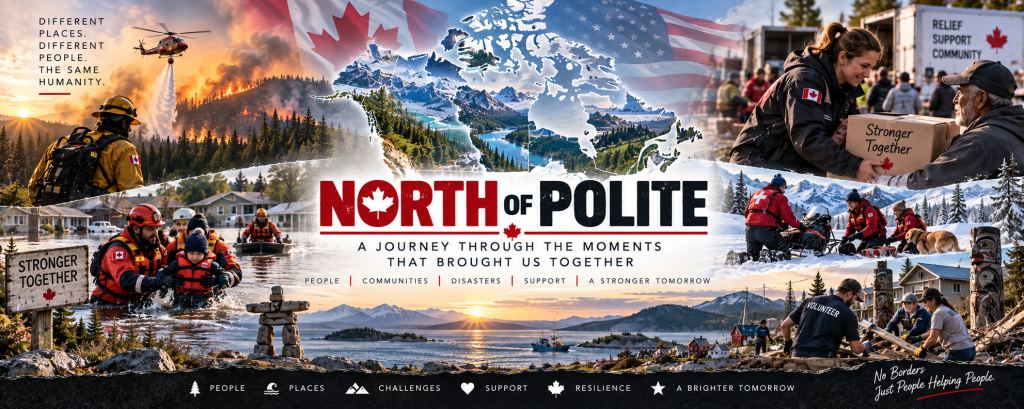
When natural disasters strike, firefighters, emergency responders, utility workers and volunteers cross boundaries to help people they may never have met.
Sometimes those boundaries are provincial.
Sometimes they are international.
That relationship extends beyond emergencies.
Since 1958, Canadians and Americans have jointly defended the continent through NORAD—a genuinely binational command responsible to both countries.
Canadian and American personnel work together to monitor and defend the same North American airspace.
None of this means Canadians have always agreed with one another.
We haven’t.
Nor have Canada and the United States.
Governments change. Policies change. Disputes happen.
But relationships between people can be deeper than the political disagreement of the moment.
That matters today, when some Albertans are asking fundamental questions about their relationship with Canada, and when Canadians and Americans are again confronting serious disagreements across their international border.
This isn’t about proving anyone right or wrong.
It isn’t about telling Alberta what it should do.
It’s about looking carefully at the moments that brought us together—and the moments that pulled us apart—and asking what they can teach us about where we are now.
Because beneath all the politics is something much older and simpler: people have repeatedly crossed those lines on a map when somebody on the other side needed them.
If we have spent generations crossing provincial and international borders to help one another when things were at their worst, how did we reach a point where those borders can feel more important than the people on the other side?
Part Two: How did we get from there to here?
North of Polite
© 2026 North of Polite. Original reporting, analysis and commentary. All rights reserved. 🍁


Leave a comment